A 7-day plan works because it gives you enough spacing to remember more while avoiding last-night panic. The goal is simple: review earlier, practice often, and taper before the exam so your brain is fresh.
Treat this calendar as a budget, not a fantasy. If you truly have six hours of homework plus two hours of review, write that honestly and trim optional tasks first. A plan you can execute beats an ambitious plan that collapses on day three.
Days 7-6: Map and prioritize
- List all finals and exact test formats.
- Break each subject into units or chapters.
- Score confidence (1-5) for each unit.
- Start with low-confidence + high-weight topics.
Set this up in the Checklist tool so you can track progress daily.
Days 5-4: Active practice only
Shift from reading to retrieval:
- Solve problems without notes first.
- Answer cue questions from memory.
- Use flashcards for terms and formulas.
Tools: Practice quiz, Flashcards, and Formula sheet.

Days 3-2: Fix weak points fast
Do not try to review everything equally. Spend most of your time where mistakes still happen.
- Collect incorrect questions in one "mistake log."
- Redo those questions with full steps.
- Teach one tough concept out loud in plain language.
Use Notes to track mistake patterns and Timer for focused correction blocks.
Day 1: Light review + sleep protection
- Review summaries, not full chapters.
- Do one short mixed practice set.
- Prepare materials and exam logistics early.
- Stop intense study early enough to sleep.
If your course grade depends on the final, quickly check targets with the Final Grade calculator.
Exam day checklist
- 10-minute summary review only.
- Start with easier questions to build pace.
- Mark and return to difficult questions.
- Leave final minutes for answer checks.
Consistency beats intensity. A calm, structured week usually outperforms random cramming.

Two exams in one day
Split prep so neither final steals the entire day before. The night prior, do light review for both subjects but prioritize sleep. Morning-of: quick cues only, alternate warm-up problems (one from each course) so your brain switches modes on purpose instead of panicking between silos.
If one exam is early and one late, protect a real lunch and a short walk between them. Avoid heavy social media spirals in the gap—use notes for a ten-line “second exam cheat sheet” you already trust.
Food, breaks, and movement
Long study days fail when blood sugar crashes. Keep protein-forward snacks, hydrate on purpose, and stand every 45–60 minutes so your back and brain reset. Movement is not wasted time—it often unlocks stuck problems when you return.
During finals week, schedule at least one non-negotiable break that is not about school (short walk, shower, chat with a friend). Guilt-free breaks prevent the “I studied twelve hours but remember nothing” burnout pattern.
If your school publishes exam room rules, rehearse them once: calculator model, backpack storage, bathroom policy. Anxiety on exam morning often comes from logistics, not content. Pack the night before so morning brain only handles breakfast and a calm arrival.
Keep one “confidence list” of topics you genuinely improved during the week—not to brag, but to read if imposter feelings spike outside the room.
FAQ
What if day four feels empty because I finished early?
Add mixed review: random problem draws, old essay prompts, or teaching a friend. “Finished” usually means comfortable with familiar items—mixed sets reveal hidden gaps.
Should I study the morning of a final?
Only light review of trusted summaries. Avoid brand-new hard topics; anxiety spikes when you discover unfamiliar material hours before the bell.
How do I balance multiple heavy finals?
Weight your blocks by exam order and difficulty. Earlier exams get slightly more front-loaded time, but do not ignore later exams entirely or you will pay for it the next weekend.
Is group study useful during finals?
Yes for explanation rounds and misconception checks; keep solo timed practice in the mix so exam conditions feel familiar.
What if I get sick during finals week?
Contact your school office immediately for medical documentation, email teachers with concise facts, and shrink your plan to highest-weight recovery tasks only.
Can calculators help on every STEM final?
Only if allowed. Practice with the exact model you will bring and know which features are permitted so you are not relearning buttons under stress.
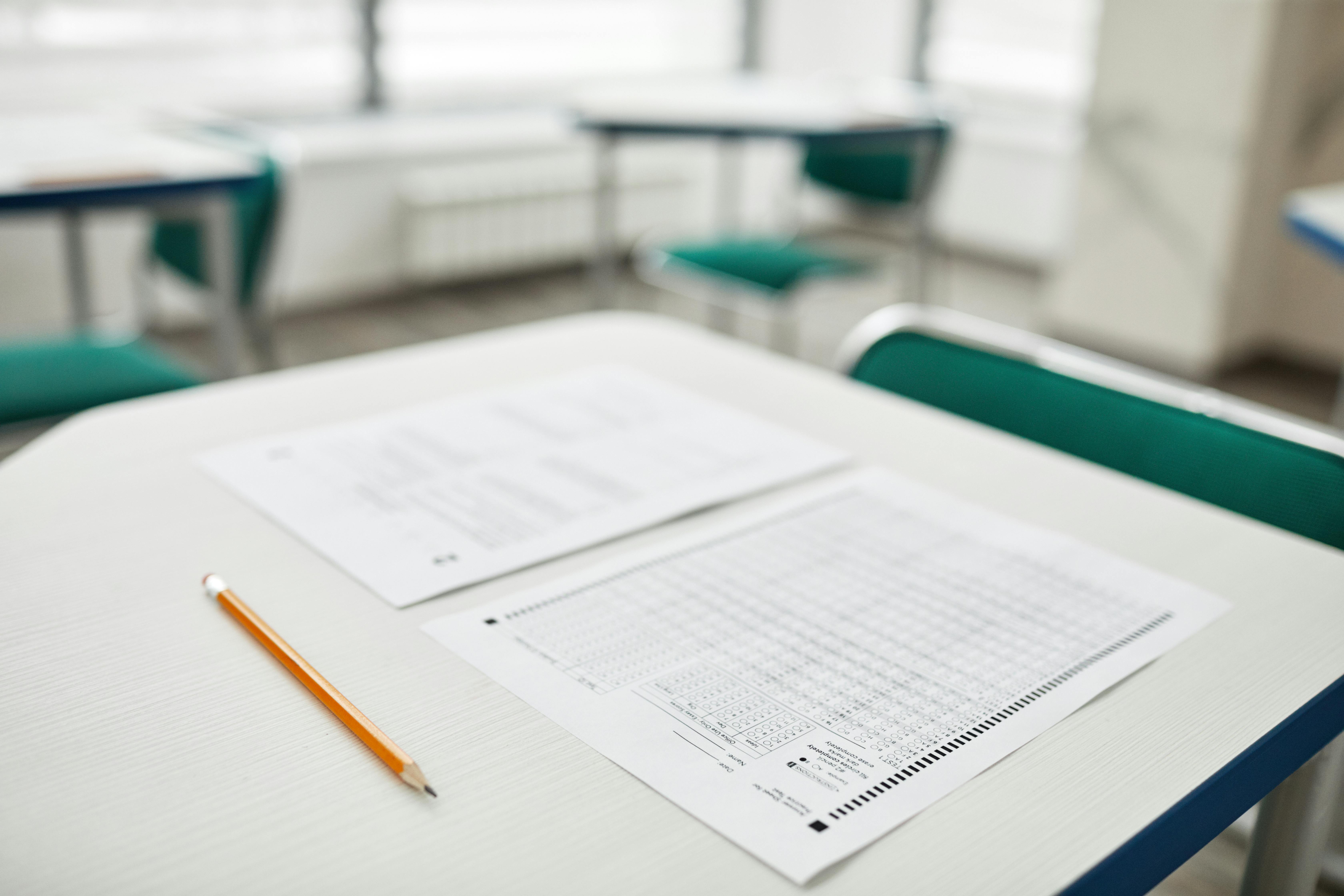
Photo source: Pexels - test paper and pencil on desk.
Next step: create your 7-day plan in Checklist and run daily sessions with the Pomodoro timer.