
Textbooks are not novels. If you read them cover to cover like a story, you will feel productive and still draw a blank on quiz questions. Smarter reading means knowing what you are looking for before your eyes hit the page, then checking whether you actually understood it.
Why textbook reading feels slow
- Passive highlighting: color on the page does not equal memory.
- No goal: without a question in mind, everything looks equally important.
- Rereading as “review”: rereading feels easier than quizzing yourself, so it is tempting—but weaker for long-term recall.
SQ3R in plain English
SQ3R is a classic active-reading loop. You do not need a special app—just a pencil margin or the Notes tool for quick captures.
- Survey: skim headings, bold terms, figures, and chapter summary. Note what the chapter claims to teach.
- Question: turn headings into questions (“What causes X?” “How do I calculate Y?”).
- Read: read to answer those questions—not to finish the page.
- Recite: after a section, look away and say the answer in a sentence or two.
- Review: at the end, list the three biggest ideas without looking.
When to skim vs read every word
Skim first when the chapter is long and you already know half the vocabulary (review units, optional sections). Slow down for worked examples, proofs, lab procedures, and anything your teacher said would be on the test.
- If a paragraph repeats the same idea three times, one careful read of the clearest version is enough.
- If you get lost, jump to the chapter summary, then backtrack to the section that defines the term you missed.
After reading: 5 minutes that stick
Close the book and write: (1) three terms you need to remember, (2) one problem type you should practice, (3) one question to ask in class or in office hours. That short list connects reading to grades better than another passive pass through the same pages.
When you are ready to drill terms, pair this with Flashcards so retrieval—not rereading—does the heavy lifting.
STEM chapter walk-through
Start with learning objectives and worked examples. Read each example with a cover sheet: try the next step yourself before revealing the book’s line. After the chapter, close the book and write the algorithm in plain language (“first balance charges, then balance atoms”). If you cannot, revisit only the subsection that defines the missing rule.
Diagram-heavy pages deserve a second pass with a pencil: trace arrows, label unknowns, and note units in the margin. STEM errors often hide in unit slips—catch them early by writing dimensional checks beside the first practice problem you attempt.
History and social studies angle
Build a tiny timeline in the margin as you read: three dates, three actors, three causes/effects. Then answer one essay-style prompt per section (“How did this policy change daily life?”). History textbooks reward structure; if you only highlight names, you will struggle on synthesis questions.
Primary sources deserve a two-pass read: first for gist, second for author bias and evidence type. Jot skeptical questions (“Whose voice is missing?”) in notes so class discussions start with your own curiosity.
End each reading session by tagging difficulty: green (could teach it), yellow (need practice), red (need help soon). That traffic-light log tells you where tomorrow’s first block should go without re-skimming the whole chapter.
FAQ
Should I read the chapter before class?
A ten-minute survey read (headings + summary) usually beats skipping entirely. Deep reading can wait until after lecture if time is tight.
What if the textbook is boring?
Boredom often signals unclear goals. Write three questions the chapter must answer before you start; curiosity follows purpose.
Is reading the teacher’s slides enough?
Sometimes, but textbooks usually add examples and vocabulary depth. Cross-check: if slides skip steps the book shows, the book is your safety net.
How do I read faster without losing comprehension?
Speed comes from skipping redundant paragraphs after you trust the pattern, not from racing every line. Practice skimming introductions and conclusions first.
Should I type or handwrite notes while reading?
Handwriting slows you down in a helpful way for new material; typing is fine for reorganizing later. Avoid copying full paragraphs either way.
What if English is not my first language?
Read with a two-column approach: key sentences on the left, your own-language paraphrase on the right. Build a small glossary for repeating academic verbs.
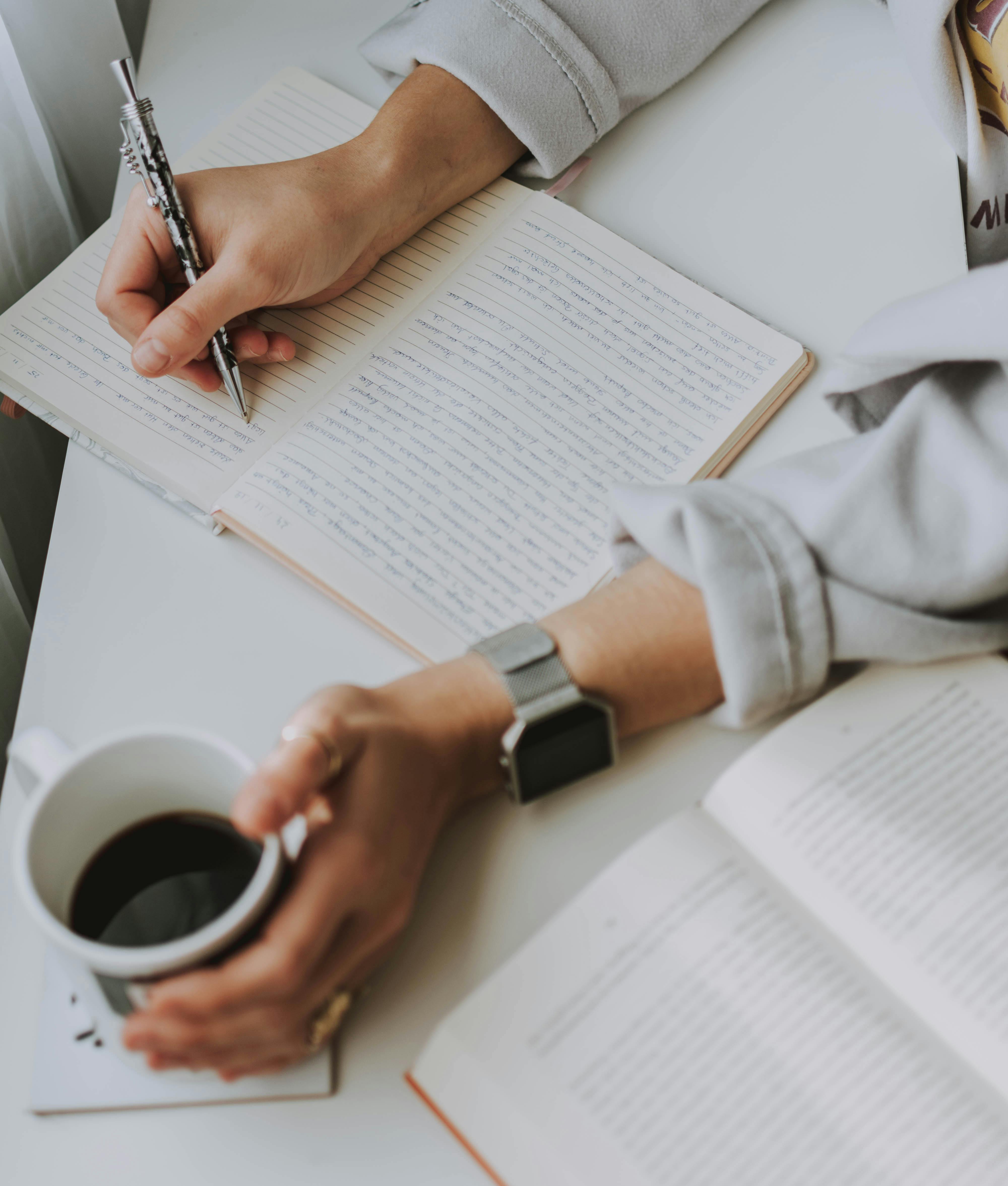
Photo: Hero image from Unsplash (Unsplash License).